5 Beginner Gym Mistakes and How to Avoid Them

Updated: Mar 25
Going to the gym for the first time — or returning after a long break — can feel a bit like showing up to a party where everyone seems to know exactly what they're doing and you're just hoping you don't accidentally drop something. We've all been there. And most of us made at least a few of these mistakes early on. No judgment. Here are five of the most common beginner gym mistakes, and more importantly, what to do instead.
1. Skipping the Warm-Up
We get it — you're excited, you only have 45 minutes, and every second feels like it counts. But skipping the warm-up is one of the fastest routes to an injury you didn't see coming. Cold muscles don't move as efficiently, and more importantly, they don't protect your joints as well as warm ones do.
A 5–10 minute warm-up — light cardio, dynamic stretching, or some movement prep — gets blood flowing, loosens up your joints, and actually makes the rest of your workout more effective. It's not wasted time. It's setup.
2. Going Too Heavy, Too Soon
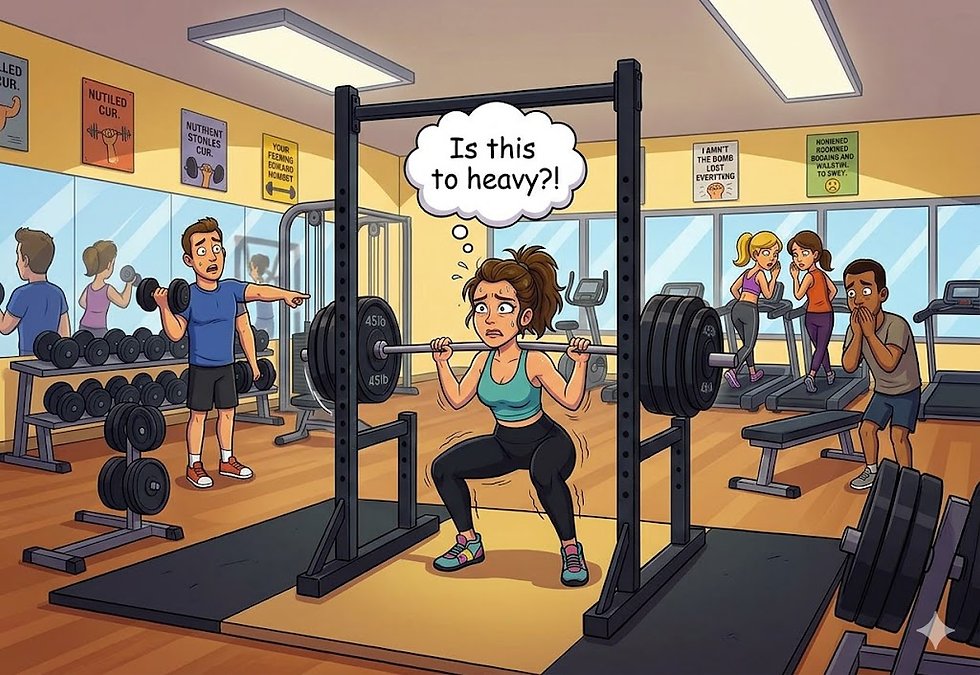
This one is almost universal. You load up what seems like a reasonable weight, get two reps in, and suddenly you're questioning every decision you've ever made. Ego lifting — using more weight than your form can actually handle — is one of the top causes of beginner injuries.
When you're starting out, the goal isn't to impress anyone. It's to learn how to move correctly. Start lighter than you think you need to, lock in your technique, and then add weight progressively over time. Strength built on solid form lasts. Strength built on shaky form leads to the physical therapist's office.
3. Doing the Same Workout Every Single Time
If you've been doing the same exercises, in the same order, with the same weight, for months — your progress has probably stalled. Your body adapts quickly. Once something stops being a challenge, it stops being a stimulus for change.
You don't need to reinvent your entire routine every week, but you should be progressively adding challenge — more weight, more reps, shorter rest, or harder variations. This concept is called progressive overload, and it's the foundation of real, lasting fitness progress. Your workouts should feel a little harder as you get stronger. That's the point.
4. Thinking More Days = More Results
One of the most common beginner misconceptions is that training every single day will speed up results. It usually does the opposite. Muscle isn't built during the workout — it's built during recovery. The workout is just the signal. Sleep and rest days are when the actual adaptation happens.
Overtraining leads to fatigue, poor performance, and a higher injury risk. Most beginners do really well with 3–4 training days per week, with light movement or rest in between. You're not being lazy on those days — you're letting the work you did actually stick.
5. Chasing Complex Exercises Before Mastering the Basics
There's always someone at the gym doing something that looks wildly complicated — a single-leg deadlift on a balance board while simultaneously doing a bicep curl. It looks impressive. It's probably not necessary. For most people, the fundamental movement patterns — squats, hinges, pushes, pulls, and carries — will get you 90% of the results you're looking for.
Master the basics before layering in complexity. A well-executed squat will serve you better than a shaky, over-complicated variation. Simple and consistent will always beat complex and sporadic. Every time.
The gym doesn't have to be complicated, intimidating, or miserable. It's a skill — and like any skill, you get better at it over time. If you're not sure where to start or feel like you've been putting in effort without seeing the results you want, that's exactly what coaches are for. Drop a comment below or reach out at MyKCPT.com — happy to help you figure out where to go from here.
Comments